
Cold & frozen storage
Air barriers for cold and frozen storage
When a cold-room door opens, air masses with different temperatures and humidity meet. A correctly designed air barrier can reduce the exchange while goods continue to move between zones.
Request an assessment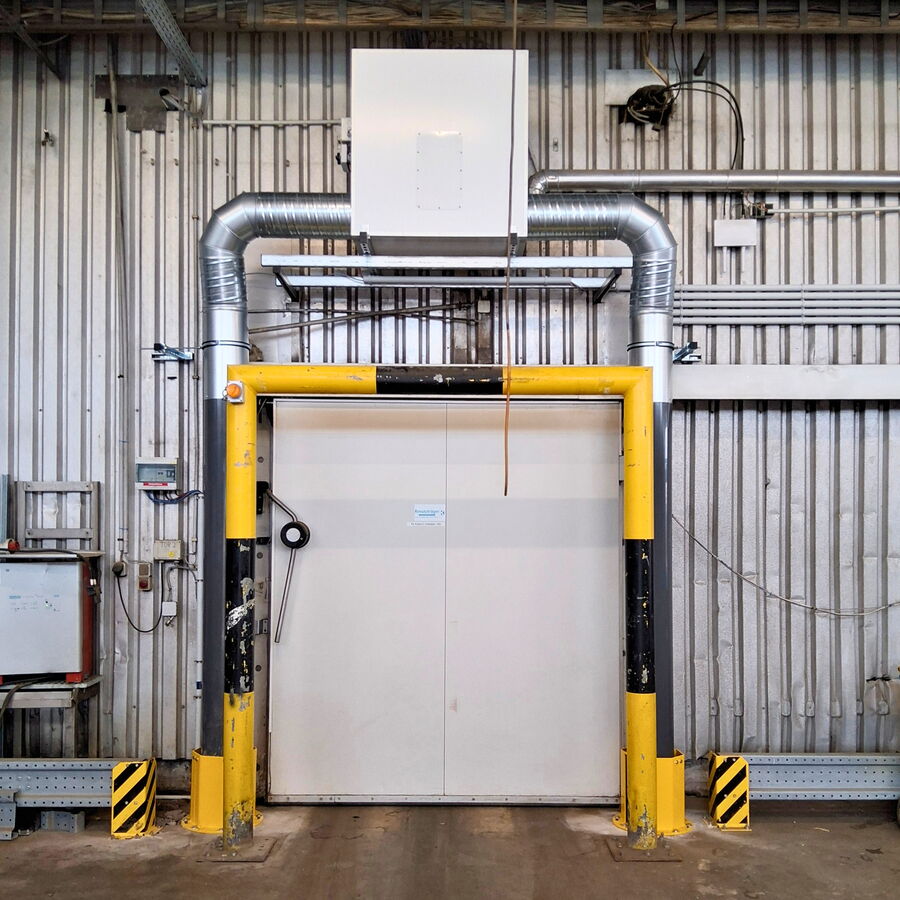
Control heat and moisture at the transition
Warmer, more humid air from an adjacent area can enter a cold or frozen room; cold air escapes in the opposite direction. Depending on the conditions, this can increase refrigeration demand and contribute to fog, condensation or ice near the door.
A directed air stream can reduce heat and moisture exchange while the door is open. Door dimensions, humidity, temperature differences, traffic and the interaction with existing doors and ventilation all matter.
Transitions with high demand
Frozen room and ante-room
Large temperature differences and moisture ingress during frequent goods movements.
Cold storage and loading
Repeated door openings in temperature-controlled distribution.
Internal climate zones
Routes between differently conditioned parts of a building.
Measure both sides of the doorway
Door dimensions alone are not enough for a cold-store design. Conditions on both sides and the actual opening pattern are essential.
- Temperatures and, where available, humidity in both zones
- Door size, opening duration and frequency
- Vehicle traffic and existing door equipment
- Observed fog, condensation or ice