Door width and height
Dimensions are essential, but wind, building pressure, temperature difference and opening duration also affect the selection.
Design and retrofit
If cold draughts, temperature loss or uncontrolled airflow remain, output alone may not explain the result. Direction, controls and the airflow through the building should be reviewed together.
Request a doorway assessment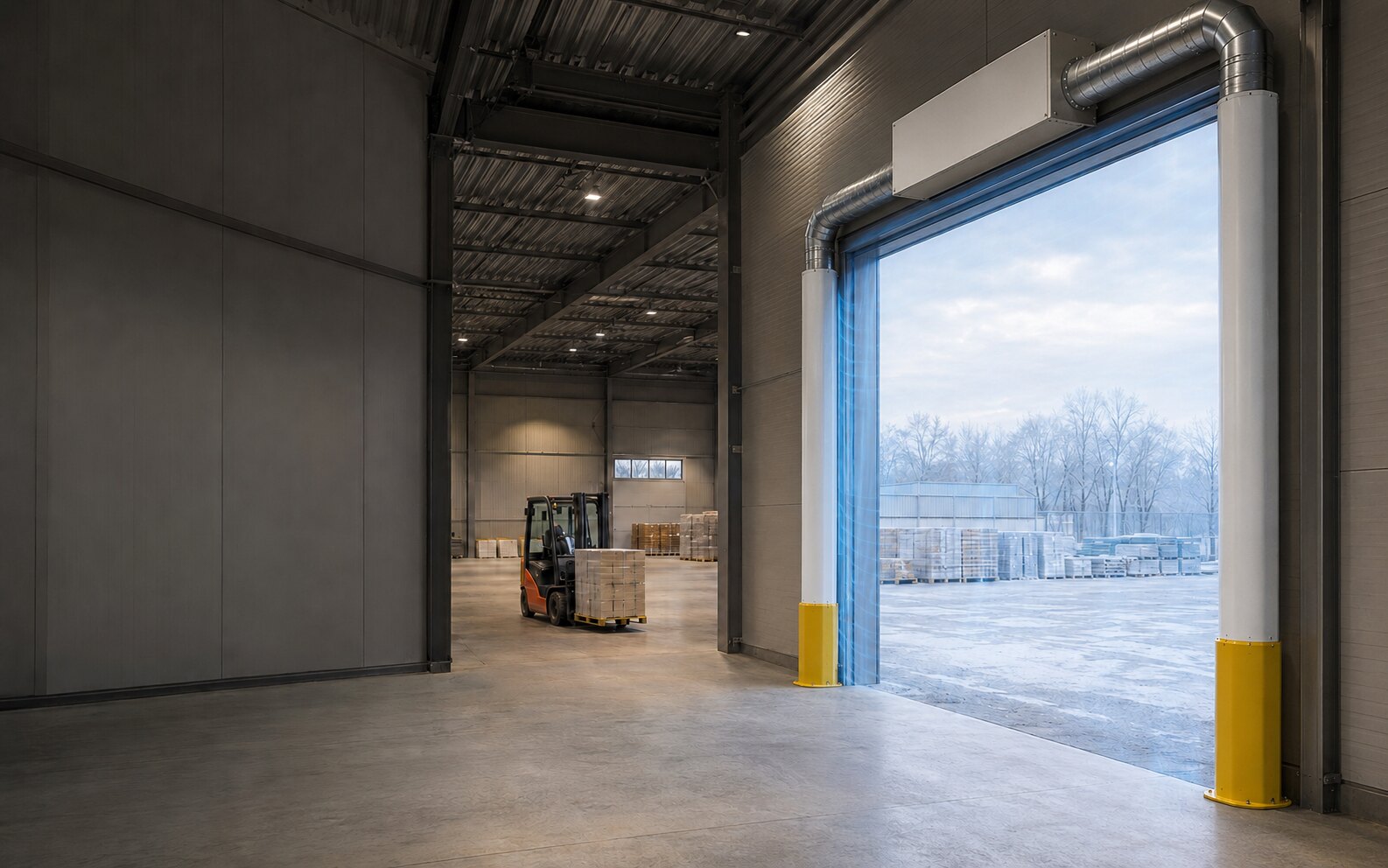
An industrial air curtain counters natural air movement at the opening. That movement is affected by temperature differences, wind, thermal buoyancy, extraction systems and other openings in the building.
For a retrofit, the first task is to identify the main airflow drivers. The review can then determine whether controls, direction, installation position or the overall system concept should be adjusted.
Technical guidance
The same checks support both new projects and the assessment of an existing industrial air curtain.
Dimensions are essential, but wind, building pressure, temperature difference and opening duration also affect the selection.
A stable barrier depends on the combination of velocity, momentum, distribution and direction across the opening.
Facade exposure, building height, roof openings, other doors and thermal buoyancy can influence airflow.
Process extraction or negative pressure can draw additional outside air through the doorway.
Guides, canopies, racks, impact protection and vehicle positions can affect installation and the air stream.
Controls should reflect door position and operating conditions so the system runs when required.
Direction and operating parameters should be checked and adjusted under representative conditions.
Record photos, clear dimensions, opening times, operating complaints and relevant conditions.
Review wind, temperatures, building height, extraction, supply air and other openings.
Check configuration, airflow direction, output, controls, condition and available mounting space.
Optimise settings, adjust the installation or evaluate a purpose-engineered replacement where appropriate.
FAQ
The configuration, reach or direction may not match the door and building airflow. Wind, negative pressure, other openings and control settings can also affect the result.
Depending on the installation, direction, operating stage, controls or shielding may be adjusted. First, the configuration should be checked against the opening and the intended result.
No. Output, distribution, direction and control need to work together. The appropriate configuration is the one designed for the actual doorway and operating conditions.
Next step
A photo, doorway dimensions and a short description are enough for an initial technical assessment.